


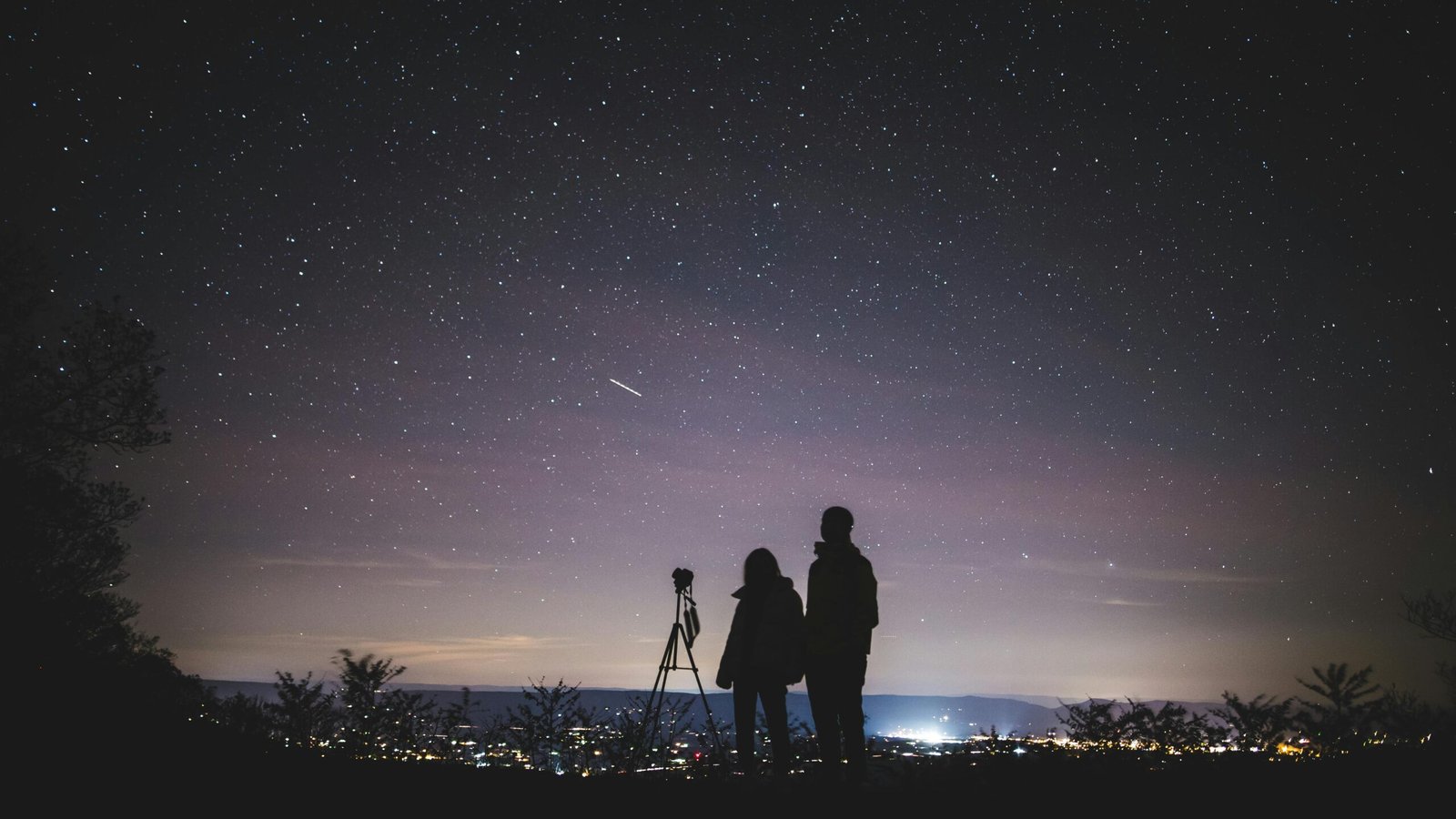
Australia offers some of the world’s finest stargazing opportunities, with vast dark-sky regions, unique southern hemisphere constellations invisible from the northern hemisphere, and remarkably clear atmospheric conditions. Whether you’re a curious beginner or dedicated amateur astronomer, Australian skies provide endless celestial wonders.
The Southern Hemisphere presents a sky dramatically different from what northern observers see. Iconic sights like the Southern Cross, Magellanic Clouds, and the brilliant center of the Milky Way overhead make Australian stargazing a bucket-list experience for astronomers worldwide.
Why Australia is Special for Stargazing
Dark Skies
Australia’s low population density means vast areas with minimal light pollution. The continent’s interior regions offer some of Earth’s darkest skies, while even coastal areas away from major cities provide excellent viewing.
Light Pollution Statistics:
- Over 80% of Australians experience light-polluted skies
- However, dark-sky locations are more accessible than in densely populated regions
- Major cities are bordered by relatively nearby dark areas
Clear Weather
Australia’s climate provides exceptional stargazing conditions:
Dry Interior: Central Australia experiences minimal rainfall and cloud cover, offering reliable clear skies year-round
Stable Atmosphere: Less atmospheric turbulence than many regions means sharper telescopic views
High Latitude Diversity: From tropical north to temperate south, different regions offer varied celestial perspectives
Unique Southern Sky
Several spectacular objects are exclusive to or best viewed from the Southern Hemisphere:
Southern Cross (Crux): Most recognizable southern constellation, appearing on the Australian flag
Large and Small Magellanic Clouds: Satellite galaxies of the Milky Way, visible as cloudy patches to the naked eye
Eta Carinae Nebula: One of the largest and brightest nebulae in the sky
Omega Centauri: Brightest globular cluster, containing millions of stars
47 Tucanae: Spectacular globular cluster near the Small Magellanic Cloud
Tarantula Nebula: Massive star-forming region in the Large Magellanic Cloud
Getting Started: No Equipment Needed
The best introduction to stargazing requires nothing more than your eyes, a clear night, and some basic knowledge.
Naked-Eye Stargazing
Human eyes are remarkable astronomical instruments once dark-adapted:
Dark Adaptation: Takes 20-30 minutes for peak sensitivity. Avoid white lights during this period.
Averted Vision: Looking slightly away from faint objects makes them more visible, using the eye’s more sensitive peripheral vision.
What You Can See:
- 2,000-3,000 stars under dark skies
- Milky Way structure (spectacular from Australia)
- Several planets (depending on season)
- Occasional satellites and meteors
- Major deep-sky objects (galaxies, nebulae, star clusters)
Best Times to Stargaze
Moon Phase: New moon or thin crescent provides darkest skies. Full moon washes out fainter objects.
Season: Winter (June-August) offers:
- Earlier darkness
- Lower humidity (clearer skies in many regions)
- Galactic center overhead during evening hours
Time of Night: After 9 PM when twilight completely fades, before moonrise or after moonset
Weather: Clear conditions, low humidity, minimal wind (for telescope stability)
Finding Dark Locations
Light Pollution Maps: Use apps like Dark Sky Finder or Light Pollution Map to identify dark areas
National Parks: Many offer excellent dark-sky camping opportunities
Beaches: Coastal areas away from towns provide dark horizons over water
Rural Areas: Agricultural regions typically have darker skies than suburban zones
Understanding the Southern Sky
Key Constellations
Southern Cross (Crux):
- Smallest constellation but most famous southern asterism
- Four bright stars form distinctive kite shape
- Points toward South Celestial Pole
- Visible year-round from most of Australia
Centaurus:
- Contains Alpha Centauri, closest star system to Earth (4.3 light-years)
- Home to Omega Centauri, spectacular globular cluster
- One of the largest constellations
Scorpius:
- Bright, recognizable constellation resembling a scorpion
- Contains red supergiant Antares (Mars’s rival)
- Best viewed winter months (May-August)
Orion:
- Familiar to both hemispheres but appears “upside down” in Australia
- Contains Orion Nebula, visible to naked eye
- Visible summer months (December-February)
Carina:
- Contains Canopus, second-brightest star in night sky
- Home to Eta Carinae Nebula
- Best viewed autumn/winter
Navigating by Stars
Finding South:
- Locate Southern Cross
- Extend long axis (top to bottom) about 4.5 times its length
- This points toward South Celestial Pole
- Drop line to horizon for true south direction
Pointer Stars: Alpha and Beta Centauri (the “Pointers”) point toward the Southern Cross, helping distinguish it from the False Cross.
Seasonal Highlights
Summer (December-February):
- Orion and associated nebulae
- Large Magellanic Cloud high overhead
- Scorpius rising in morning sky
- Long warm nights but more humidity
Autumn (March-May):
- Milky Way stretching overhead
- Southern Cross at peak visibility
- Carina and associated nebulae
- Generally excellent conditions
Winter (June-August):
- Galactic center of Milky Way overhead
- Scorpius prominent evening sky
- Sagittarius and associated nebulae
- Best season for deep-sky objects
- Cold but crystal-clear conditions
Spring (September-November):
- Rising summer constellations
- Magellanic Clouds ascending
- Increasing temperatures
- Variable weather
Equipment for Beginners
Binoculars: The Best First Investment
Before buying a telescope, consider quality binoculars:
Recommended Specs:
- 7×50 or 10×50 (magnification x objective diameter)
- Wider fields of view than telescopes
- Easier to use and transport
- No setup required
What Binoculars Reveal:
- Jupiter’s four largest moons
- Craters on the Moon
- Star clusters (Pleiades, Jewel Box, etc.)
- Nebulae (Orion, Eta Carinae)
- Andromeda Galaxy and Magellanic Clouds
- Countless stars invisible to naked eye
Choosing Your First Telescope
When ready for a telescope, avoid common beginner mistakes:
Department Store Warning: Cheap department store telescopes often disappoint with poor optics and unstable mounts.
Recommended Types:
Dobsonian Reflectors (Best beginner choice):
- Simple, sturdy design
- Large aperture for price
- Intuitive to use
- 6-inch (150mm) or 8-inch (200mm) ideal starting sizes
Refractors:
- Low maintenance
- Excellent for Moon and planets
- More expensive per inch of aperture
- 70-100mm good starter sizes
Schmidt-Cassegrain:
- Compact, portable
- More expensive
- Require more maintenance
- Better for experienced users
What Size Matters: Aperture (diameter) is most important specification. Larger apertures gather more light, revealing fainter objects and more detail.
Essential Accessories
Star Chart or Planetarium App:
- Stellarium, SkySafari, Star Walk 2
- Helps identify celestial objects
- Shows what’s visible at your location and time
Red Flashlight:
- Preserves night vision
- Essential for reading charts and adjusting equipment
Comfortable Seating:
- Reclining chair or camping chair
- Stargazing involves looking up for extended periods
Warm Clothing:
- Even summer nights grow cool
- Layer appropriately for conditions
Notebook:
- Record observations
- Track conditions and equipment performance
Australia’s Premier Stargazing Locations
New South Wales
Warrumbungle National Park:
- Australia’s first Dark Sky Park
- Siding Spring Observatory nearby
- Excellent visitor facilities
- Accessible from Sydney (5-6 hours)
Coonabarabran:
- Australia’s astronomy capital
- Gateway to Warrumbungle
- Multiple public observatories
Victoria
Grampians National Park:
- Dark skies in western Victoria
- Stunning landscape context
- Good facilities
Wimmera Region:
- Extremely dark agricultural area
- Minimal light pollution
- Wide open horizons
South Australia
Flinders Ranges:
- Remote, dark location
- Spectacular desert landscapes
- Crystal-clear dry air
Kangaroo Island:
- Minimal light pollution
- Coastal location
- Unique wildlife bonus
Western Australia
Ningaloo Coast:
- Exceptional darkness
- Coastal setting
- World Heritage area
Outback WA:
- Some of Australia’s darkest skies
- Remote locations
- Requires serious preparation
Queensland
Carnarvon Gorge:
- Dark central Queensland location
- Spectacular gorge setting
Outback Queensland:
- Vast dark areas
- Dry, clear conditions
- Remote accessibility
Tasmania
Cradle Mountain:
- High elevation
- Dark skies
- Alpine environment
South Coast Tasmania:
- Southern aurora opportunities
- Dark coastal locations
Northern Territory
Uluru-Kata Tjuta:
- Central Australia darkness
- Iconic landscape
- Tourist infrastructure
Kakadu National Park:
- Tropical stargazing
- Unique northern perspective
Planets: Dynamic Sky Wanderers
Unlike stars, planets change position against background constellations, creating ever-changing views.
Visible Planets
Mercury: Difficult to observe (always near Sun), brief appearances during greatest elongations
Venus: Brilliant “Evening Star” or “Morning Star,” phases visible in telescope
Mars: Red color distinctive, appears largest during opposition (every 26 months)
Jupiter: Brightest (except Venus), shows cloud bands and four major moons even in small telescopes
Saturn: Famous rings visible in small telescopes, an unforgettable first view
Uranus: Visible in binoculars as blue-green dot, appears star-like without telescope
Neptune: Requires telescope, appears as faint blue dot
Planetary Alignments
Occasionally, planets appear close together in the sky, creating photogenic conjunctions. MyWeather provides notifications of notable planetary events.
Deep-Sky Objects
Beyond planets lie countless galaxies, nebulae, and star clusters.
Beginner Deep-Sky Targets
Large Magellanic Cloud (LMC):
- Satellite galaxy of Milky Way
- Visible to naked eye as cloudy patch
- Spectacular in binoculars
- Contains Tarantula Nebula
Small Magellanic Cloud (SMC):
- Second satellite galaxy
- Smaller but still naked-eye visible
- Beautiful binocular object
Eta Carinae Nebula:
- Bright, extensive nebula
- Visible to naked eye
- Spectacular in any optical aid
- Contains massive unstable star
Jewel Box (NGC 4755):
- Open star cluster near Southern Cross
- Colorful stars
- Beautiful even in binoculars
47 Tucanae (NGC 104):
- Globular cluster
- Second brightest in sky
- Visible to naked eye
- Spectacular in telescopes
Omega Centauri (NGC 5139):
- Largest, brightest globular cluster
- Visible to naked eye
- Millions of stars
- Unforgettable telescopic view
Intermediate Targets
Centaurus A (NGC 5128): Galaxy with prominent dust lane Coal Sack: Dark nebula blocking Milky Way starlight Various Open Clusters: Scattered throughout Milky Way Additional Globular Clusters: Dozens visible in moderate telescopes
Meteor Showers
Predictable annual events when Earth crosses debris trails from comets.
Major Southern Hemisphere Showers
Eta Aquarids (May 5-6): Fast meteors from Halley’s Comet debris, 30-40 per hour at peak
Southern Delta Aquarids (July 28-29): Good southern shower, 15-20 per hour
Geminids (December 13-14): Reliable shower, 50+ meteors per hour (though constellation low from Australia)
Quadrantids (January 3-4): Strong but brief peak, partially visible from northern Australia
Watching Meteors
- No equipment needed
- Dark location away from lights
- Reclining position looking up
- Be patient; rates vary
- Best after midnight
International Space Station
The ISS appears as a bright, fast-moving “star” crossing the sky in minutes.
When to Look: Check websites or apps (Spot the Station, Heavens Above) for local pass times
Appearance: Brighter than most stars, steady (not blinking), moves quickly
Timing: Best viewed during passes around dawn or dusk when ISS is sunlit against dark sky
Astrophotography Basics
Smartphone Astrophotography
Modern smartphones can photograph:
- Milky Way (using night mode)
- Bright planets
- Moon
- Constellations
- Northern/Southern Lights
Tips:
- Use night/pro mode
- Maximize exposure time (15-30 seconds)
- Use tripod or stable support
- Use timer to avoid shaking phone
DSLR/Mirrorless Basics
With dedicated camera and tripod:
- Wide-angle lens (14-24mm)
- Manual mode
- Wide aperture (f/2.8 or wider)
- High ISO (1600-6400)
- 10-25 second exposures
- Manual focus on stars
Astronomy Clubs and Groups
Joining clubs accelerates learning through shared knowledge:
Benefits:
- Access to equipment
- Experienced mentors
- Group observing sessions
- Newsletters and resources
- Star parties and events
Major Organizations:
- Astronomical Society of Australia
- State-based astronomical societies
- Local astronomy clubs in most regions
Online Resources
Planetarium Software:
- Stellarium (free, powerful)
- SkySafari (mobile, various versions)
- Cartes du Ciel (free)
Websites:
- International Dark-Sky Association
- Sydney Observatory
- Scienceworks Melbourne
- Various state observatories
YouTube Channels:
- Numerous astronomy channels offering tutorials
- Equipment reviews
- Observation guides
Weather and Stargazing
Clear skies are essential:
MyWeather’s Stargazing Forecast provides:
- Cloud cover predictions
- Seeing conditions (atmospheric stability)
- Transparency (clarity)
- Moon phase and rise/set times
- Humidity levels
Cloud Types:
- High thin cirrus: May allow some viewing
- Thick cloud layers: Block everything
- Scattered clouds: Windows between clouds
- Morning fog/dew: Can affect late-night sessions
Common Beginner Questions
Q: Do I need a telescope to start? A: No! Start with naked-eye stargazing and binoculars. Learn the sky before investing in telescopes.
Q: How much should I spend on first telescope? A: Quality starts around $300-400 for basic Dobsonian. Avoid cheaper options.
Q: Why can’t I see colors in nebulae? A: Human eyes lack sensitivity for faint color perception. Cameras reveal colors invisible to eyes.
Q: What magnification do I need? A: Magnification matters less than aperture. Excessive magnification produces dim, blurry images.
Q: Can I see the Moon landing sites? A: No. They’re too small for Earth-based telescopes. Largest telescopes barely resolve 50-100 meter features.
Q: When is the best time to stargaze? A: New moon periods with clear weather. Winter (June-August) generally offers best conditions.
Safety and Ethics
Eye Safety: Never look at the Sun through unfiltered optical equipment. Instant permanent eye damage results.
Location Safety:
- Let someone know where you’re going
- Carry phone and emergency supplies
- Be aware of wildlife
- Respect property boundaries
Light Etiquette:
- Use only red lights at group events
- Shield lights from others
- Keep car headlights off when near observers
Environmental Responsibility:
- Take all trash with you
- Respect natural areas
- Follow park regulations
- Use designated camping areas
The Journey Ahead
Stargazing opens an endless journey of discovery. Every clear night offers something new—whether your first glimpse of Saturn’s rings, tracking the motion of Jupiter’s moons over hours, or lying under the Milky Way in Australia’s outback.
Australian skies showcase cosmic wonders invisible from the Northern Hemisphere, making every session an exploration of unique celestial territory. From suburban backyards to remote dark-sky sanctuaries, the universe awaits overhead.
The best equipment for stargazing is whatever gets you outside looking up. Start tonight—the universe isn’t going anywhere, but clear nights don’t last forever.
Plan your stargazing sessions with MyWeatherMate’s specialized astronomy forecasts, including cloud cover predictions, seeing conditions, and alerts for notable celestial events.
Related Articles:
- Australia’s Best Dark Sky Destinations: A Complete Guide
- Best Aurora Photography Tips from Australian Experts
- Understanding Space Weather: Solar Storms and Earth’s Magnetic Field
- Astrophotography for Beginners: Camera Settings and Techniques