


Residents ordered to evacuate immediately as fast-moving blazes rip through southeastern and northeastern suburbs, with homes under direct threat and schools evacuated
Multiple emergency warnings have been issued across Perth as two fast-moving bushfires threaten lives and homes in the city’s southeastern and northeastern suburbs, forcing mass evacuations and bringing major highways to a standstill on Thursday.
The Department of Fire and Emergency Services issued an emergency warning at 4:55pm local time for residents in Kenwick, Wattle Grove, Maddington and Beckenham, with the stark message that people are “in danger and need to act immediately to survive.”
A second emergency warning was activated around 2pm for residents east of Great Northern Highway in Bullsbrook and Upper Swan, as authorities battle to contain the rapidly spreading blazes under challenging conditions.
Kenwick Fire Threatens Homes and Schools
The southeastern fire, burning partly through the Kenwick Wetlands Nature Reserve, has already affected approximately 50 hectares and is moving in an easterly direction with homes on Bickley Road and Boundary Road under direct threat.
“You are in danger and need to act immediately to survive. There is a threat to lives and homes,” the DFES warning stated. “If the way is clear, leave now for a safer place. This may be with family or friends away from the area. Do not wait and see, leaving at the last minute could put your life in danger.”
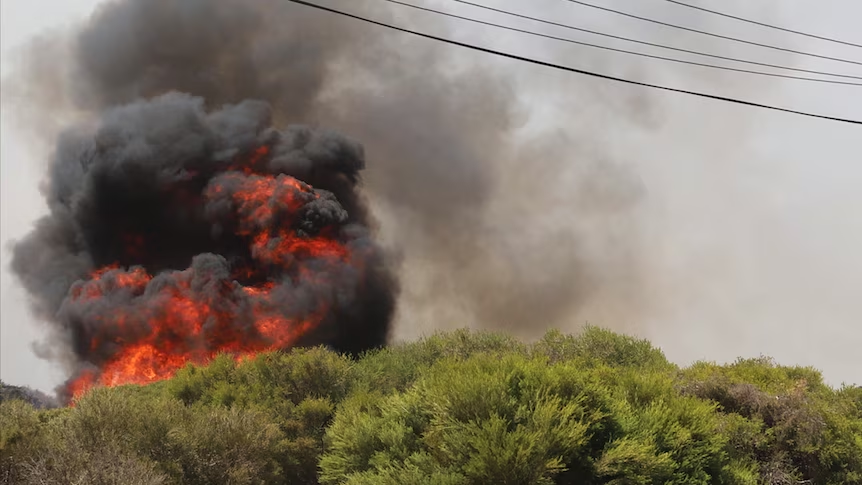
The warning area is bounded by Welshpool Road East, Tonkin Highway, Kenwick Road, Brixton Street and Roe Highway. Television footage from the scene shows several homes in the semi-rural area dangerously close to the advancing flames, with towering fire and thick plumes of smoke visible from helicopters overhead.
Rehoboth Christian College and East Kenwick Primary School have been evacuated as a precautionary measure, with both institutions sitting within the designated emergency warning zone. Parents were notified and instructed to collect their children as firefighting crews worked to protect properties in the area.
Major traffic disruptions have been reported on Roe Highway and Tonkin Highway, with both arterial routes experiencing significant delays as emergency services battle the blaze. Authorities have closed multiple roads in the surrounding areas and urged motorists to avoid the region entirely.
Northern Fire Threatens Upper Swan and Bullsbrook
The second emergency warning, issued for Bullsbrook and Upper Swan in Perth’s northeast, has placed additional strain on firefighting resources. The blaze is burning near Walyunga National Park and is advancing in a northeasterly direction, uncontained and uncontrolled.
Aerial firefighting resources were redirected from the Kenwick fire to assist operations in Bullsbrook as crews struggled to gain the upper hand against the flames. A Watch and Act alert has been established north of the emergency warning zone as authorities monitor the fire’s progression.
The area includes RAAF Base Pearce in Bullsbrook, with defence personnel and local residents placed on high alert. Reports indicate that some external structures have already been lost to the flames, though the full extent of property damage remains unclear as firefighters continue their efforts.
Third Fire Sparks Warning in Wheatbelt
Compounding the emergency response, a third fire has triggered a Watch and Act warning for the Quellington area, approximately 100 kilometres east of Perth in the Wheatbelt region. The alert was issued at 2:26pm, stretching firefighting resources across multiple fronts.
DFES has expanded fire warning areas to include Watch and Act zones in Orange Grove and Beckenham, positioned on opposite sides of the main Kenwick emergency warning area, creating a complex firefighting landscape across Perth’s eastern suburbs.
Challenging Fire Conditions
Temperature in Perth reached 30 degrees Celsius by midday Thursday, with a high fire danger rating forecast for the region. South-westerly winds have been exacerbating conditions, driving the flames and creating erratic fire behaviour that has complicated containment efforts.
Aerial support has been deployed with water-bombing aircraft working alongside ground crews, though the intensity of the blazes and the semi-rural nature of affected areas have presented significant challenges. Images from above showcase the fire’s ferocity, with flames engulfing trees and threatening properties across multiple fronts.
The Department of Fire and Emergency Services has mobilised extensive resources, with career firefighters and volunteer brigades from across the metropolitan area responding to the incidents. However, authorities acknowledge that fighting fires on multiple fronts has placed considerable strain on available personnel and equipment.
Community Response and Evacuations
Residents in the warning areas have been instructed to leave immediately if it is safe to do so, travelling in a southerly direction away from the Kenwick fire zone. Those in Bullsbrook and Upper Swan areas have received similar evacuation orders as authorities prioritise life safety over property protection.
For residents who cannot evacuate safely, DFES has advised that they must shelter in their homes in a room away from the fire front, ensuring they can easily escape if conditions change. The department emphasised that the extreme heat generated by bushfires can be deadly well before flames reach properties.
Emergency services have urged people within affected areas to avoid calling triple zero unless facing a life-threatening emergency, as the volume of calls can overwhelm the system and delay responses to critical incidents. Instead, residents should monitor Emergency WA, call 13 DFES (13 3337), follow DFES on social media, or listen to ABC Local Radio and 6PR for updates.
Historical Context
Perth and Western Australia’s experience with bushfires has been well-documented, with the region facing recurring threats during the summer fire season. The 2021 Wooroloo bushfire stands as one of the most significant recent fires to impact the City of Swan, destroying more than 30 homes and burning approximately 7,000 hectares across northern parts of the Perth Hills.
That fire coincided with a COVID-19 lockdown, presenting additional logistical challenges for residents and emergency response workers. Emergency warnings remained in place for multiple days, affecting areas including Bullsbrook, Upper Swan, Aveley, The Vines and Ellenbrook—some of the same communities now facing renewed bushfire threats.
Fire Season Warning
Thursday’s fires serve as a stark reminder that Western Australia’s bushfire season extends through the summer months, with dangerous fire conditions possible across the state. The combination of accumulated vegetation from winter rainfall, elevated temperatures, and variable wind conditions creates ideal circumstances for rapid fire spread.
Authorities have repeatedly emphasised the importance of bushfire preparedness, urging all residents in fire-prone areas to have an updated bushfire survival plan, maintain defendable space around properties, and remain alert to changing fire conditions throughout the danger period.
The Bureau of Meteorology’s seasonal outlook suggests that continued warm and dry conditions are likely across much of Western Australia through the summer months, maintaining elevated fire risk across the state.
Ongoing Response
As of Thursday evening, emergency warnings remained in place for both the Kenwick and Bullsbrook fires, with Watch and Act alerts covering expanded areas. Firefighting operations are expected to continue through the night, with crews working to establish containment lines and protect threatened properties.
Residents across Perth’s eastern and northeastern suburbs have been advised to remain vigilant, monitor official warnings closely, and be prepared to evacuate at short notice if conditions deteriorate further. The situation remains dynamic, with authorities warning that fire behaviour can change rapidly based on weather conditions and terrain.
For the latest updates, residents should visit emergency.wa.gov.au, download the Emergency WA app, or contact the DFES information line on 13 3337. In life-threatening emergencies, residents should call 000 immediately.